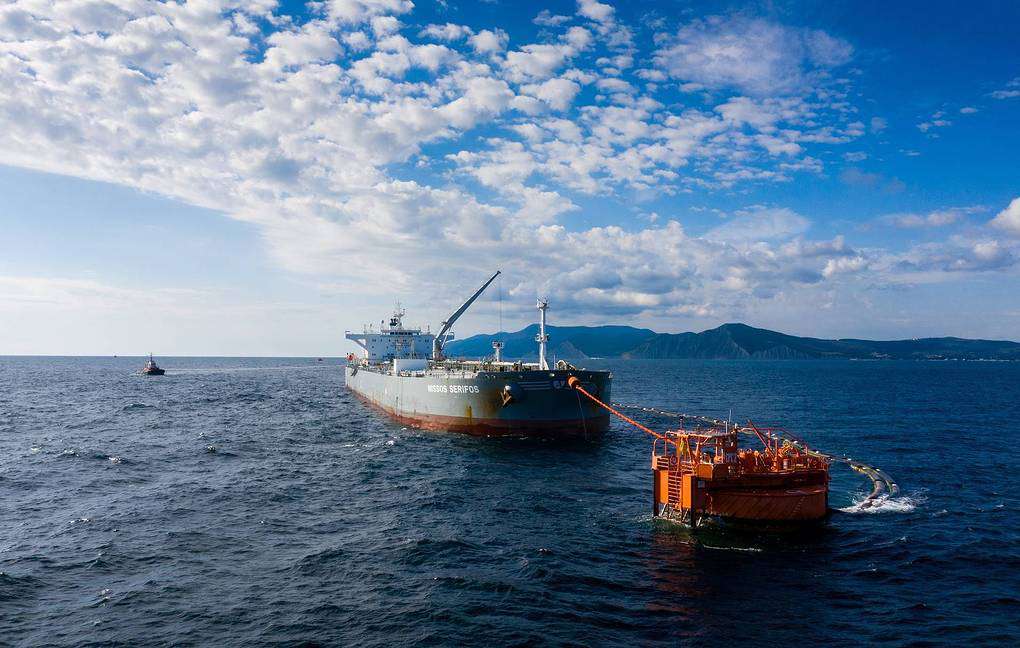
On April 23, 2022, the offshore mooring unit 3 (VPU-3) was put into operation at the sea terminal of the Caspian Pipeline Consortium (CPC) after repairs, Kazpravda.kz reports with reference to the consortium's Telegram channel.
A short-term improvement in weather conditions on April 23, 2002 made it possible to carry out diving operations and open the pipeline end manifold (PLEM), which allowed the resumption of oil transshipment at the specified VPU.
“Earlier, the specialists of the contractor and CPC carried out washing of the remote mooring device (VPU) using a tanker, replaced damaged floating hoses, and also successfully tested pressure and checked the serviceability of all VPU systems,” the CPC added.
VPU-2 remains temporarily decommissioned. VPU-1 is functioning normally.
Recall that on March 21 and 22, 2022, after a period of adverse weather conditions at VPU-3, damage was detected in the form of a displacement of the power frame of one of the floating hoses. In this regard, the Caspian Pipeline Consortium was forced to suspend the operation of the said VPU.
Timely detection of malfunctions and decommissioning of equipment made it possible to exclude the possibility of an accidental oil spill into the Black Sea, summed up in the consortium.
It should be noted that the CPC pipeline system is one of the largest investment projects in the energy sector with the participation of foreign capital in the CIS. The length of the Tengiz-Novorossiysk pipeline is 1,511 km; more than two thirds of all export oil of Kazakhstan is transported along this route, as well as raw materials from Russian fields, including those located in the Caspian Sea. The CPC marine terminal is equipped with three remote mooring units (VPUs) that allow safe loading of tankers at a considerable distance from the coast, including in adverse weather conditions.